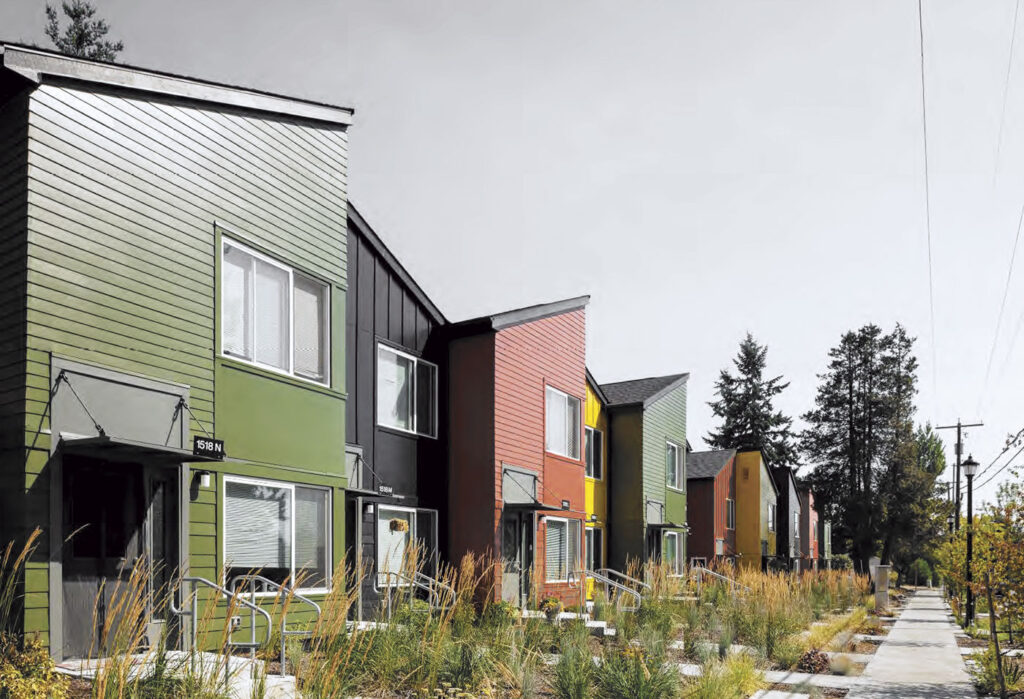
In an unstable economy, Washington residents struggle to find affordable housing.
The lament is laced with confusion and angst. “I’ve got a decent job. Why can’t I afford to buy a house? Or even rent a nice apartment?”
It’s not an isolated complaint. From the Seattle-Tacoma area to Spokane, the Palouse, and other cities across Washington state, the clamor for affordable housing has risen to the breaking point.
According to a recent report by Up for Growth, a Washington, D.C., nonprofit research firm, the Evergreen state logged a shortfall of 225,600 homes between 2000 and 2015—eighth worst in the nation for housing underproduction.
A recent study looked specifically at the effects on older adults. WSU’s Metropolitan Center for Applied Research and Extension in Everett joined forces with King County and the City of Seattle Aging and Disability Services to assess the area’s projected needs for senior housing.
The 2018 report, “Moving Toward Age-Friendly Housing in King County,” found that the number of older adult-led households is on track to outpace the supply of accessible and affordable housing in King County. Half of senior households who rent are already cost-burdened, as are 40 percent of those with a mortgage.
“The challenge of finding places to live for a diverse aging population who are on a fixed income, who may have health or mobility issues, is going to be a significant factor of what we have to deal with as a community,” says Martha Aitken, Metropolitan Center assistant director.
The study team, which included Season Hoard, assistant professor at the WSU Division of Governmental Studies and Services, and Cory Bolkan, associate professor in human development at WSU Vancouver, targeted solutions for aging in place and equity, especially for the older LGBTQ+ population.
Their strategies ranged from updating land use policies to allow cottage clusters and accessory dwelling units to increasing funding for home delivery services. They also recommended building senior housing units near established services to provide for daily needs, socialization, and transportation.